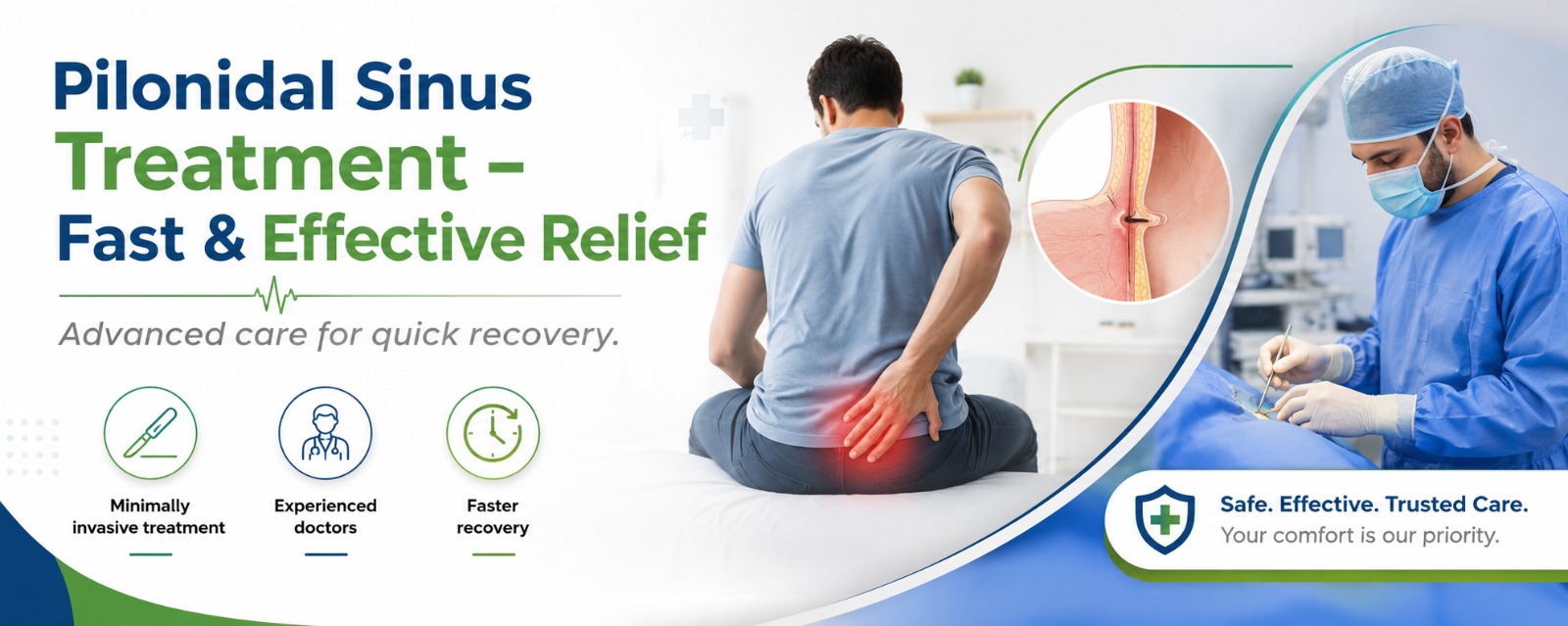
Sitting shouldn't hurt. Nor should standing up after you've been sitting too long or noticing a damp patch on your shirt at the end of a long day at work.
If you're dealing with a swollen, tender lump near your tailbone that keeps coming back no matter what home remedy you try, you're likely dealing with a pilonidal sinus—and you're far from alone. At Vithai Piles Hospital in Kasarwadi, PCMC, Pune, we see this condition every week, and we know exactly how much it wears people down. Not just the pain — the constant worry about it flaring up before a wedding, a long train journey, or an important meeting.
The good news: pilonidal sinus is treatable, and with the right approach, it doesn't have to keep returning. Under Dr. Atul Patil (M.S. Shalyatantra) and Dr. Sarita Patil (Dip. G.O.), our team treats this condition using both laser technology and Ayurvedic Ksharasutra therapy, whichever suits your case best so you get lasting relief, not a temporary fix.
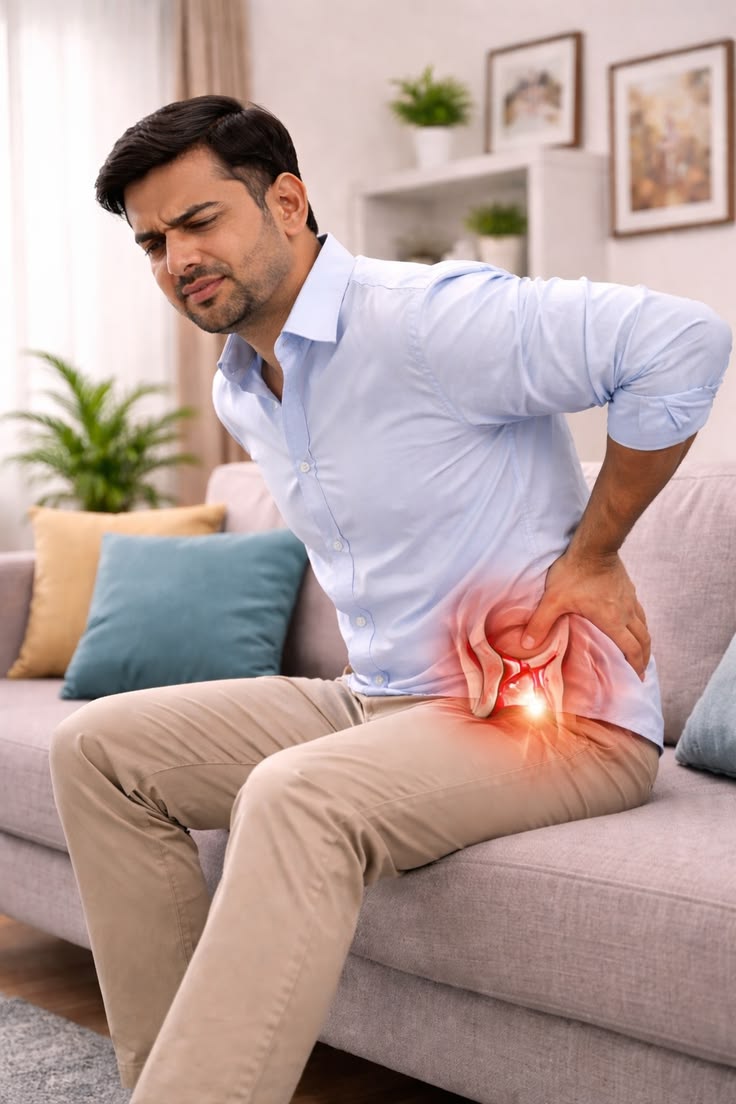
Pilonidal sinus is a condition commonly caused by prolonged sitting—often seen in individuals who drive for long hours or have a hairier physique. When friction and negative pressure are created between the buttocks, particularly when the skin is moist from sweat, loose hairs around the natal cleft (the central area of the buttocks) are pulled deeper into the skin fold.
The sharp tip of the hair creates a small initial puncture or wound in the skin. As movement continues, more hairs are drawn into this opening, creating a non-healing, tube-like tract beneath the skin—known as a pilonidal sinus.
Because hair and debris remain trapped deep within the tract, pilonidal sinus rarely resolves on its own without structured medical or surgical treatment to remove the root cause.
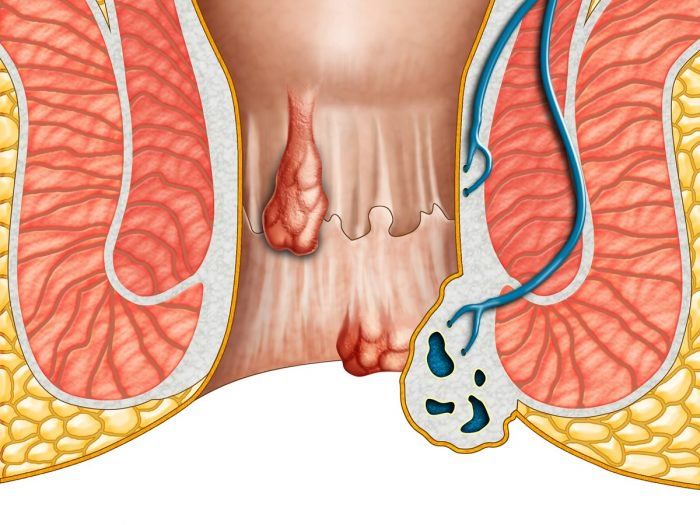
If you're noticing any of these symptoms near your tailbone, it's worth getting checked rather than waiting it out:
Note: If you're noticing even two or three of these symptoms, it's best to consult a specialist early. Left untreated, a pilonidal sinus rarely heals on its own—it tends to form a painful abscess or turn into a chronic, recurring issue that becomes harder to treat over time.
Not every case needs the same approach. That's why Dr. Atul Patil and Dr. Sarita Patil assess your specific condition—how deep the tract runs, how many openings there are, whether it's a first episode or a recurring one—before recommending a tailored treatment plan.
Laser treatment uses a focused beam of energy to seal and close the sinus tract from the inside, without large cuts or open wounds. It's become the preferred option for many patients because it offers key advantages:
Ksharasutra is a time-tested Ayurvedic technique where a medicated thread is placed through the sinus tract. The thread works gradually—cutting through infected tissue while helping new, healthy tissue form in its place. Many patients choose this route because it treats the root cause thoroughly with a strong track record against recurrence, especially in complex or recurrent cases.
Some patients respond better to laser. Others, especially with recurring or more complex sinus tracts, do better with Ksharasutra—or a combination of both. Because Dr. Atul and Dr. Sarita are experienced in both modern surgical and classical Ayurvedic approaches, you're not pushed toward a single technique. You get the treatment that actually fits your case.
Choosing where to get treated matters as much as choosing to get treated at all. Here's what sets our care apart:
Dr. Atul Patil has spent over a decade treating anorectal conditions—piles, fissures, fistulas, and pilonidal sinus specifically. This isn't a side specialty for us; it's what we do all day, every day.
Our laser procedure targets and closes the sinus tract precisely without the large open wound traditional surgery leaves behind. That means less pain, less bleeding, and a faster return to routine.
Some patients want the fastest fix (Laser), while others prefer Ayurvedic Ksharasutra for a thorough healing process. We offer both and guide you honestly based on your specific case.
Dr. Sarita Patil, our proctologist, sees female patients who feel more comfortable discussing anorectal conditions with a woman doctor—removing a common barrier to getting timely care.
With clinics in Kasarwadi, Pimple Saudagar, Thergaon (Dange Chowk), Ravet, Baner, and Aundh, you won't have to travel far across the city for consultations or follow-up visits.
We start with a physical examination and a detailed history—including symptom duration, past recurrences, and daily routine. In most cases, a clinical exam is enough to confirm the diagnosis without unnecessary scans.
Depending on the size, depth, and history of your sinus, we recommend either Laser surgery or Ksharasutra treatment. We explain the pros, recovery time, and cost of each so you can make an informed decision.
Laser treatment is done under local anesthesia as a daycare procedure—no large cut, minimal bleeding, and no overnight hospital stay in most cases. You're comfortable and back home the same day.
Most patients return to light activity within a few days and resume normal work in 1–2 weeks. We schedule regular check-ins to monitor healing and prevent early signs of recurrence.
Note on Recovery: Recovery times vary based on the procedure chosen and case complexity. Laser patients typically resume routine activities much faster, while Ksharasutra provides controlled, step-by-step healing.
A pilonidal sinus doesn't get better by waiting it out, and you don't have to keep planning your day around it. Whether you're dealing with your first flare-up or you've been through this cycle one too many times, the team at Vithai Piles Hospital is here to give you a treatment plan that actually addresses the cause.

Dr. Atul Patil is working in the field of anorectal since last 8 years. He is post graduate of this subject from reknown Govt. College of ayurveda from Ernakulam, Kerala. He has develop his own treatment of anorectal diseses, with the great combination of kerala Ayurvedic treatment along with allopathic treatment, which assures the 100% cure.
Read More
Dr. Sarita Patil lady piles doctor in pune is Young and dynamic personality. Her eagerness to surpass the limits of the ordinary, led her to pursue a relatively unknown specialty – Proctology. She is master in anorectal disease associated with femanity.
Read MoreYou don't need to wait until the pain is unbearable. Consider booking a consultation if you:
Sit for long hours at work (drivers, office staff, students) put extended pressure on the lower spine area.
Have had a pilonidal sinus before that seemed to heal, then came back over time.
Notice recurring swelling, tenderness, or persistent fluid discharge near the tailbone region.
Have tried antibiotics or home care remedies without obtaining long-lasting relief.
Feel embarrassed discussing it but are experiencing ongoing discomfort in your day-to-day life.
There is nothing unusual about this condition. Early treatment is simpler, faster, and far less likely to recur than delayed treatment.
Everything you need to know about Pilonidal Sinus treatment at Vithai Piles Hospital

“ Dr. Atul Patil is very friendly and provides full support to his patients. He also answers all patient questions fully and fully satisfied them. ”
“ My experience was absolutely delightful. I just had to show my insurance Ecard and a few ID proof and everything was taken care of. Insurance agents are not involved at all. My experience with Dr. Atul Patil has been smooth and he really listens to every query with patience. ”
“ During our consultation, the doctor provided really helpful guidance for our next steps. ”
“ Definitely the best doctor and he has great experience and is a hard worker, thanks doctor Saab. ”
“ Dr Atul Patil is really good and Dr Sarita mam along with their staff is very good in terms of taking care of the patient and providing best care thanks a lot ”
“My wife's piles treatment done in vithai piles hospital. Dr. Sarita patil mam did this operation and operation done successfully without any trouble. All staff are very carefull. Hospital is very clean and well maintained with all facilities. ”
“ Dr. Patil has extensive experience in Hemorrhoids, Fissures. Vitthai hospital is very good. The staff is very good. Very experienced. The staff take good care of the patients. The hospital has a good atmosphere. The patient feels very good in such an environment. ”
“ Verry good Doctor and supporting staff. It's been one year since my treatment of level 4 Piles with Fisher now I have no complain. Thanks to Doctor Anil Patil. ”